Opportunity Solution Trees your whole team can work in
Map the outcome you want to drive, the customer opportunities behind it, the solutions you could build and the assumptions you need to test. One living tree instead of a whiteboard photo.
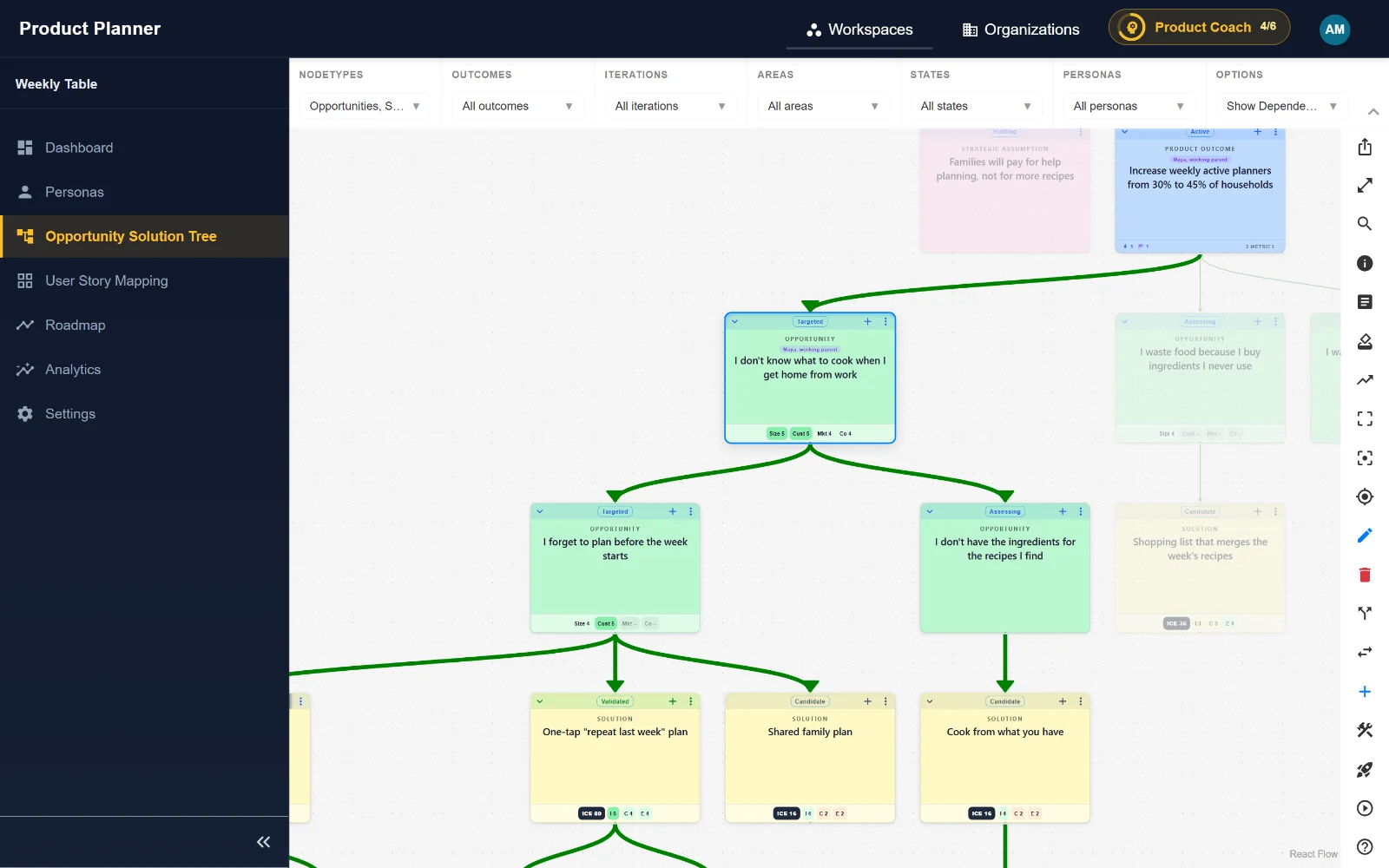
How it works
Start from a measurable outcome
Set the product outcome with leading and lagging metrics, a baseline and a target. Add your vision, business outcomes and strategy above it if you want the bigger picture.
Map the opportunity space
Add the needs, pain points and desires you hear from customers, with evidence and how often they happen. Nest child opportunities and score them to pick a target.
Compare solutions
Add several solutions under the target opportunity and compare them with impact, confidence and ease scores.
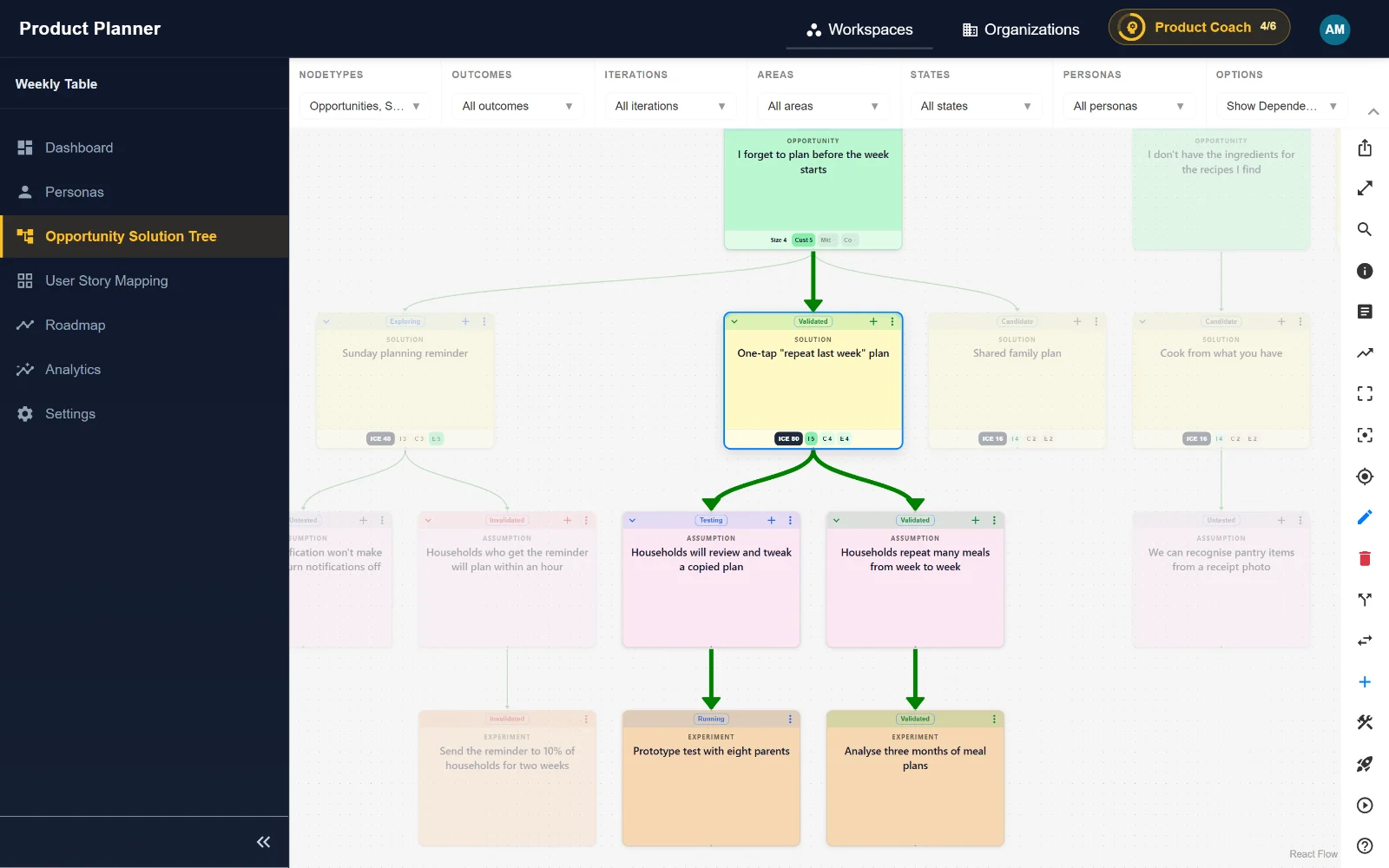
Test the riskiest assumptions
List assumptions by category, importance and evidence, design experiments with success criteria, and record what you learned.
What you get
Vision and strategy above the tree
Optional vision, business outcome, strategy and strategic assumption layers, so every solution traces back to why it matters.
Metrics on every outcome
Leading and lagging metrics with baselines and targets, linked to the opportunities that should move them.
Assumptions and experiments
Desirability, viability, feasibility, usability and ethical assumptions, each with experiments and results.
Filters and focus
Filter by outcome, persona, iteration, area and state, and focus on one branch while the rest stays in view.
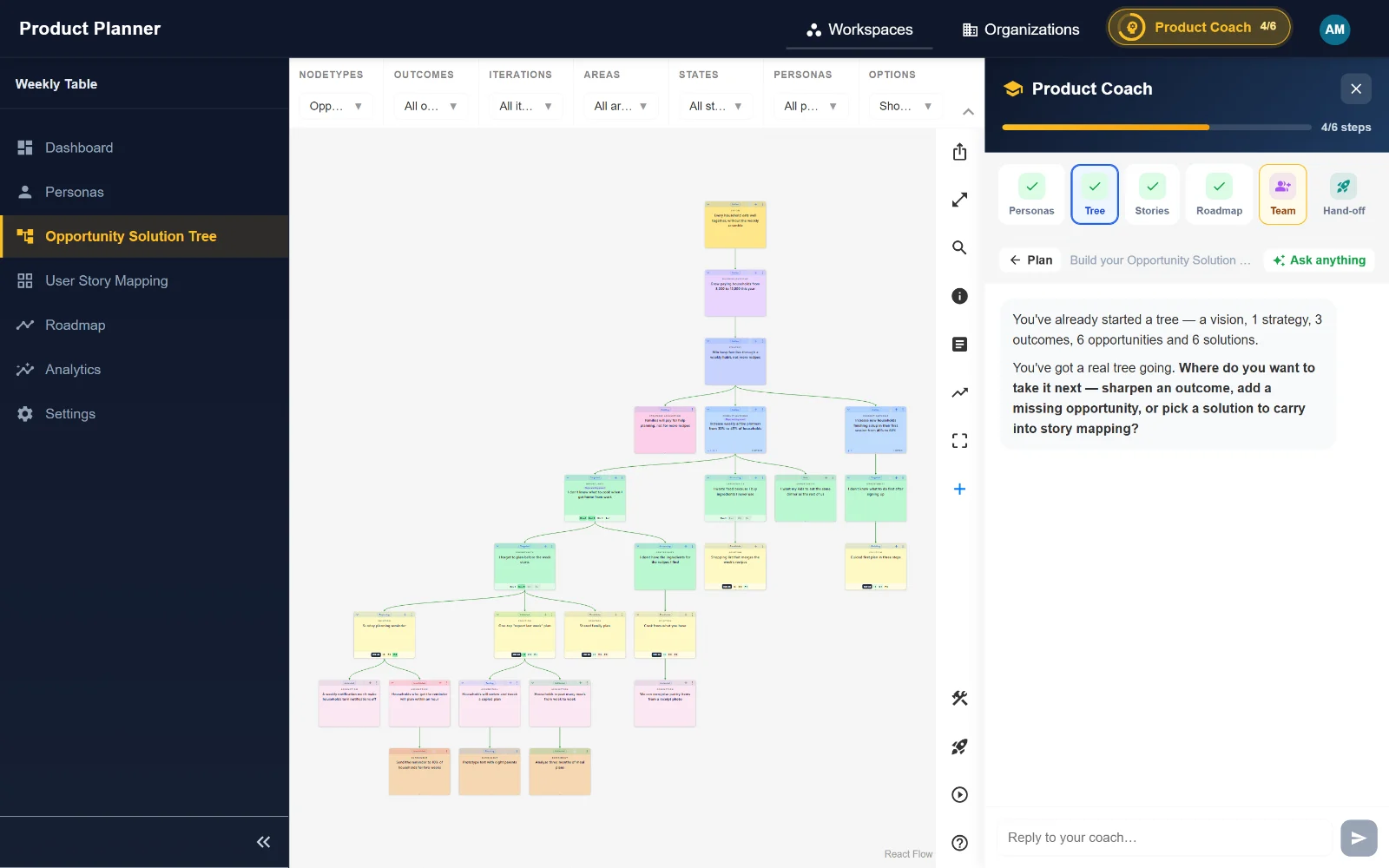
An AI product coach
The coach knows your tree and suggests what to work on next, from sharpening an outcome to testing an assumption.
From solution to story map
When a solution holds up, open it in a user story map and plan the release.
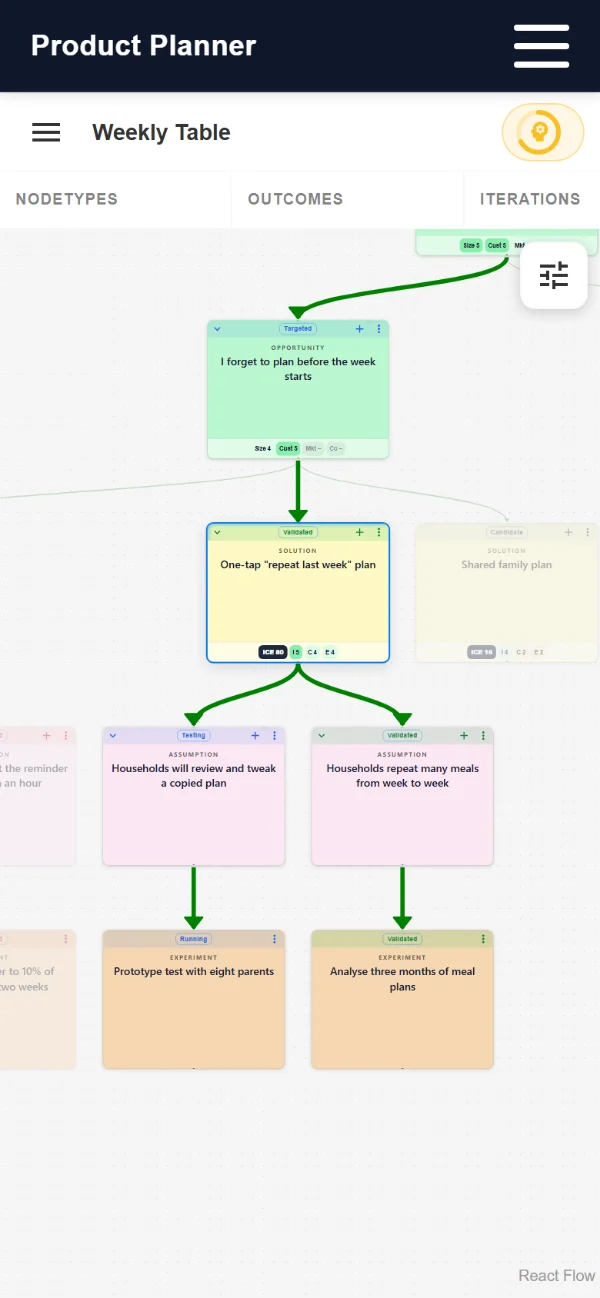
On your phone too
Check a branch, an assumption or an experiment result from your phone, between customer interviews.
Questions
- What is an Opportunity Solution Tree?
- A visual map from a measurable outcome to the customer opportunities that drive it, the solutions that address them, and the assumption tests that check those solutions. Teresa Torres introduced it in Continuous Discovery Habits.
- Can I use a classic tree without vision and strategy?
- Yes. The vision, business outcome and strategy layers are optional. Start at the product outcome and you have a classic Opportunity Solution Tree.
- Does it work with Azure DevOps?
- Yes, natively. When a solution is ready to build, map it in a user story map and sync the stories and tasks with Azure DevOps work items, both ways. Teams that don’t use Azure DevOps use Product Planner on its own.
Try Product Planner free for 90 days
No credit card. Set up a workspace in a minute and let the product coach guide you.